Living Stones of the Holy Land — Part 1
The First to Follow Christ: Early Christians in the Apostolic Age
“You also, like living stones, are being built into a spiritual house…” – 1 Peter 2:5
This past Christmas, I found myself alone in the place where God became man.
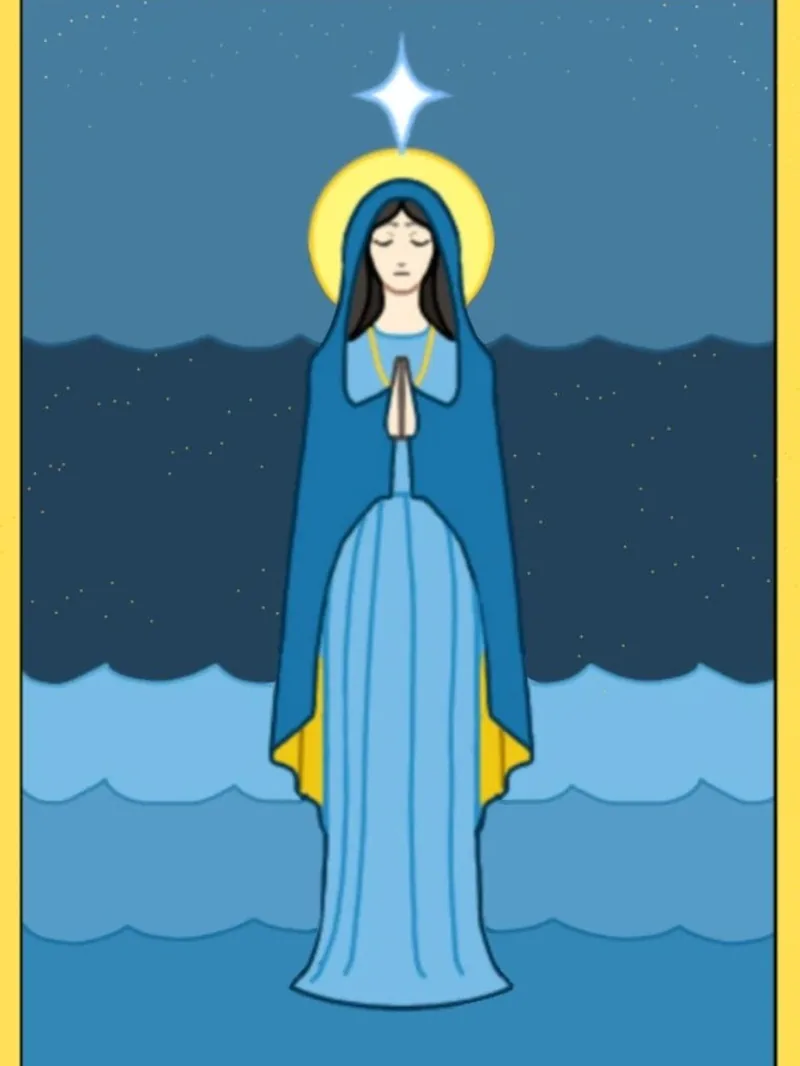
As Orthodox Christians celebrated the Divine Liturgy above me in the Church of the Nativity, I slipped beneath the stone and incense into the grotto below. There, in silence, I knelt in the exact spot where the Virgin gave birth to her Son – the Word made flesh.
Just above, in the crowded sanctuary, priests chanted the Liturgy in tones that I knew echoed from the early centuries of the Church. But below, in that humble cave, it was still and quiet. I prayed not only for peace – in Gaza, in Bethlehem, and throughout the world – but for memory. I prayed that we would remember Who was born here, and Who still lives here.
Too many today have forgotten that the people who first received the Gospel, who first walked in its light and carried it across deserts and seas, are still among us. They are not museum pieces or remnants. They are the first to follow. They are the “living stones” whom Peter, the first of the apostles, referred to in Scripture.
The Church Was Born Here
Christianity did not begin in Rome or Constantinople or Washington, D.C. It began in the hills of Judea. It began with a teenage girl in Nazareth who called herself God’s handmaid. It began with a carpenter named Joseph, who took her as his wife and brought her, pregnant and weary, to Bethlehem for the census.
I’ve walked the same narrow streets they once traveled as they searched for shelter. It’s hard to imagine, walking through the olive-scented air of the Old City, that salvation unfolded in such simplicity – in such poverty. No room in the inn. A cave. A manger. God with us.
The Church was born not just in Bethlehem, but through the lives of men and women who followed Jesus through the dusty roads of Palestine – fishermen, tax collectors, zealots, and sinners. It was here that Christ called Peter. It was here that the Lord wept. Here He died. Here He rose.
And it was here in Jerusalem that the Holy Spirit descended at Pentecost. The upper room is not a metaphor. The Church was not born in theory or abstraction. It was born in time, in place, in blood and breath and fire.
A Diverse and Ancient Church
When we speak of the early Church in Palestine, we must speak with nuance. These early Christians were not just a single ethnic group. They were Jews, Samaritans, Greeks, Romans, Ethiopians, Arabs, and others who lived in the land we now call the Holy Land. It was this rich and diverse tapestry of peoples who first heard and received the Gospel, and who knit together the original Christian community. Over time, through shared faith, worship, and witness, they formed the foundation of the Palestinian Christian community that still lives in the region today.
At Pentecost, when the Holy Spirit descended upon the apostles and Mary in the upper room, Scripture tells us what was said by the countless people who first received and embraced the Gospel that day:
“Parthians and Medes and Elamites, and residents of Mesopotamia, Judea and Cappadocia, Pontus and Asia, Phrygia and Pamphylia, Egypt and the parts of Libya belonging to Cyrene, and visitors from Rome, both Jews and proselytes, Cretans and Arabians – we hear them telling in our own tongues the mighty works of God.” (Acts 2:9–11)
The Arabians were there, too. They heard the Gospel in their own tongue from the very first breath of the Church.
Today’s Palestinian Christians are not converts to a Western religion. They are the roots and the originators of the religion of the West. Their ancestors heard the apostles preach, were baptized in the Jordan, and built churches before Christianity reached Europe.
In fact, Arab tribes were among the first non-Jewish communities to embrace Christianity. By the second century, the Ghassanids, an Arab tribal confederation, had converted to the faith. Their early adherence to the Gospel and later protection of Christian communities in the Levant would shape the region for centuries to come. These Arab Christians spoke the language of the people, worshipped in local liturgies, and helped anchor the Church in its Semitic and Middle Eastern home.
Yet today, the presence of these ancient believers is often erased – not by accident, but by deceptive narratives. The politics of the region has reduced the members of this ancient community to footnotes in the stories of others. They are spoken of, if at all, as if they are recent arrivals or irrelevant relics of a bygone era.
To Christians of all stripes, this erasure should be recognized as a kind of violence – a hacking at the roots of our faith. To forget a people is to deny their dignity. To silence a community is to rob them of their inheritance. And to forget the first Christians is to forget our own story.
I’ve met these forgotten brothers and sisters – in Bethlehem, in Beit Sahour, in Gaza. They are not asking for special status or sympathy. They are asking simply to be seen for what they are.
As my friend Alice Kasiya told me while we stood outside the Church of the Nativity, “We are still here. We never left!”
Acts of the Apostles: A Local Story
When you read the New Testament’s Book of Acts, you’re reading the story of these early Christians. You’re reading about the first bishops and deacons – Palestinian men like James, Philip, and Barnabas. You’re reading about women who opened their homes for worship, who anointed Christ, and who wept at His tomb and proclaimed His Resurrection.
You’re reading about today’s Jerusalem, Samaria, Caesarea, and Gaza. The Holy Land was the cradle of the faith and the launching point for its mission to the world.
The first Christians didn’t have seminaries, cathedrals, or canon law. They had homes, prayers, and personal wounds – marks of the cost of discipleship. They lived under the shadow of an empire and the threat of persecution. And yet, they were radiant. They gathered to break bread, to hear the apostles’ teaching, and to care for widows and orphans. Their faith was not a privilege they had inherited. It was a cross they had chosen.
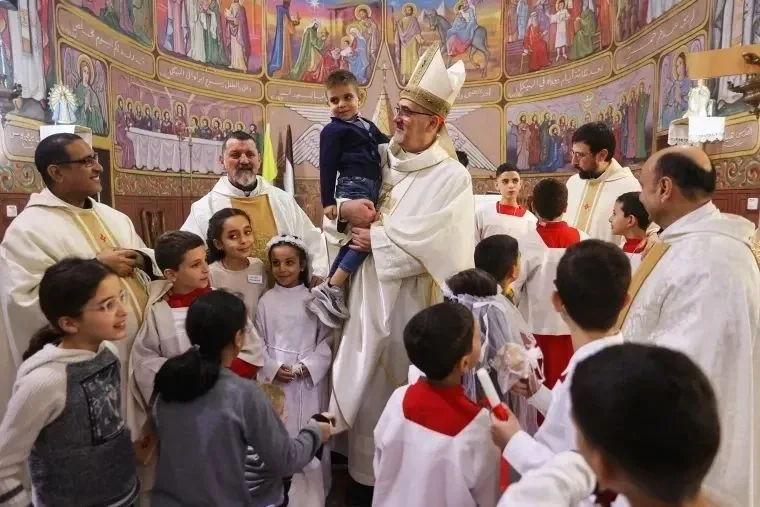
And their witness remains today in the Christian families of Palestine, who still gather, still baptize, and still proclaim the same Gospel in the same place.
Our Family Story
I run an organization called the Vulnerable People Project. We serve communities abandoned by the world – Christians and Jews in Nigeria, Yazidis in Iraq, Hazara in Afghanistan, Uyghurs in Chinese-occupied East Turkestan, and families under siege in Gaza. I’ve come to understand that evil doesn’t simply kill. It isolates people. It obscures them. It rewrites their stories.
That’s why memory matters in the Holy Land. Because when we remember the first to follow, we recover our story. We remember that Christianity was born not in palaces, but in caves. Not in conquest, but in communion. Not in wealth or power, but in poverty, in family homes, and in the trust and charity that formed between often-hunted believers.
And we remember that the Christians who remain in the Holy Land, though few and though under siege, are not just witnesses to the past. They are the real and present Body of Christ in the place of His birth.
The Church Is One Body
St. Paul tells us that when one member suffers, all suffer. But what happens when one member is ignored? When their suffering is filtered through political agendas or discarded entirely?
Too many in the West look at Palestinian Christians through a geopolitical lens, not an ecclesial one. But they are our brothers and sisters. And not in a sentimental way, but in the deepest sacramental sense.
They belong to us. And we belong to them.
Their faith has been tested in ways we can scarcely imagine. Checkpoints, displacement, airstrikes, surveillance… And yet they remain. They remain not as victims, but as witnesses.
This series, Living Stones of the Holy Land, is a small act of remembrance and a way of re-centering the narrative. Not around ideology or worldly power, but on the Gospel. On the people who first received it, and who still cling to it.
A Final World from Bethlehem
That evening in the Church of the Nativity as I sat alone beside the silver star marking the place of Christ’s birth, I was struck by the weight of continuity.
This is not just where the Word became flesh. It’s where His Mystical Body began to breathe.
And the Christians of Bethlehem – those selling olive wood carvings, serving in local churches, raising their children beneath the cross – they are not artifacts. They are the still-beating heart of the Gospel’s beginning.
To be truly human is to love your neighbor. And these neighbors – the first to follow – must not be forgotten.
Not by us.
Not by the Church.
Not now.
(Republished with permission by the Jason Jones Show)