
Supreme Court Victory for Common Sense
The Supreme Court is confirming common sense.
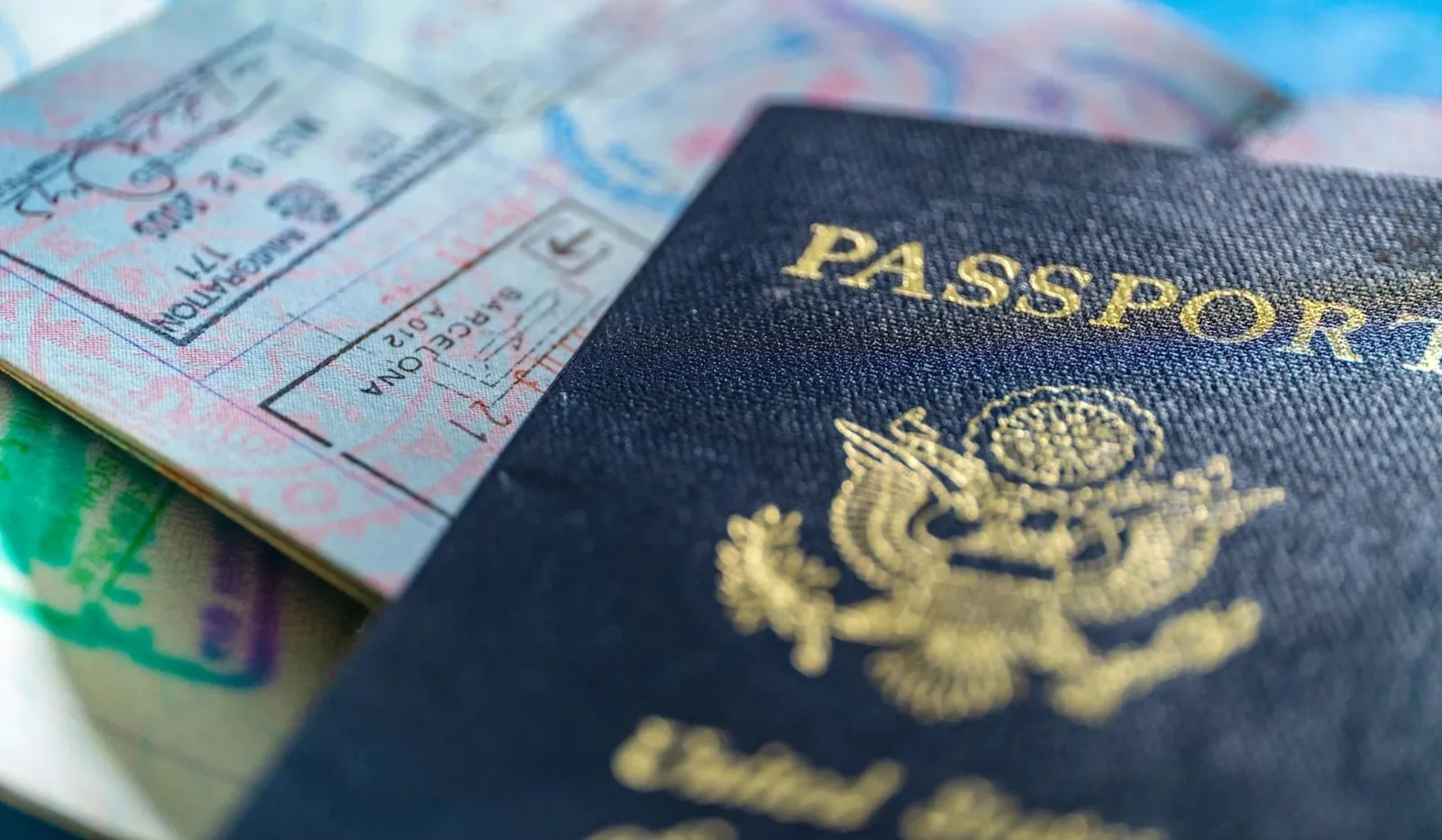
On Thursday the high court issued an emergency order in Trump v. Orr, temporarily affirming the Trump administration's policy that U.S. passports must reflect one's biological sex, not one's gender identity.
The unsigned majority opinion was supported by Chief Justice John Roberts and Justices Clarence Thomas, Samuel Alito, Neil Gorsuch, Brett Kavanaugh, and Amy Coney Barrett.
Left-leaning Justices Ketanji Brown Jackson, Sonia Sotomayor, and Elena Kagan dissented, decrying the ruling as a setback for transgender rights.

The case traces its origins to Jan. 20, President Donald Trump's first day in his second term, when he signed Executive Order No. 14001, directing federal agencies to eliminate policies perceived as promoting "gender ideology."
In response, the State Department overhauled passport guidelines. The new "Passport Policy" prohibits transgender, nonbinary, and intersex individuals from selecting sex markers (M, F, or X) aligned with their perceived gender identity; instead, it requires documentation proving sex assigned at birth, often via birth certificates.
Plaintiffs Ashton Orr and six others — transgender, nonbinary, and intersex individuals — filed a class-action lawsuit on Feb. 7 in the U.S. District Court for the District of Massachusetts.
While traveling from West Virginia to New York, Orr had been accused by the U.S. Transportation Security Administration of using fake documents: While Orr's driver's license listed her as "male," her passport designated her as female, her biological sex. She then requested an updated passport to reflect her perceived gender identity of "male." Four days later, Trump took office.
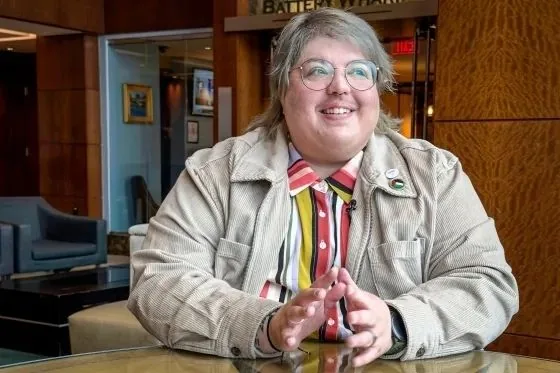
Represented by the ACLU, ACLU of Massachusetts, and Covington & Burling LLP, Orr and the other plaintiffs alleged violations of the Fifth Amendment's Equal Protection Clause, Due Process Clause, and the Administrative Procedure Act (APA).
They argued the policy discriminates based on gender identity and sex, inflicts irreparable harm through misgendering, and lacks rational basis.
In April 2025, District Judge Allison Burroughs granted a preliminary injunction for the plaintiffs, requiring the State Department to halt its new passport policy, and instead issue passports according to the plaintiffs' gender identity.
By June 17, the injunction was expanded nationwide. The court rejected the Trump administration's motion to dissolve the injunction, even after the Supreme Court handed down its ruling in L.W. v. Skrmetti, which upheld Tennessee's ban on gender surgery for minors. Significantly, the court refused to recognize transgenders as a protected class with special rights under the Constitution.
After an unsuccessful appeal in the First Circuit Court, the Trump administration submitted its emergency petition to the U.S. Supreme Court.

"Displaying passport holders’ sex at birth no more offends equal protection principles than displaying their country of birth," the majority opinion notes, "in both cases, the Government is merely attesting to a historical fact without subjecting anyone to differential treatment."
The majority opinion also emphasized foreign affairs implications: failure to have a uniform passport policy on biological sex could lead to diplomatic inconsistencies and administrative chaos.
The dissent, led by Justice Jackson — the same woman who, when questioned during her judicial confirmation hearing, could not define what a woman is — sharply criticized the ruling as "breezy inequity," arguing that it ignores profound dignitary and safety harms to a marginalized group.
She claimed that forced "misgendering" exacerbates gender dysphoria, exposing transgenders to risk of harms. Joined fully by Justices Sotomayor and Kagan, the dissent accused the majority of minimizing evidence of animus against transgenders — rooted in Trump's executive order — and prioritizing executive deference over constitutional protections.
The Supreme Court's order is a temporary stay. It has not yet ruled on the merits of the case.